


Custom Jewelry vs. Store-Bought: What's the Real Difference in Quality, Price, and Meaning?
Custom Jewelry
Custom Jewelry vs. Store-Bought: What's the Real Difference in Quality, Price, and Meaning?
Ask ten people what "custom jewelry" means and you'll get ten answers. A lot of them assume it's a rich person's option, or that you sketch something on a napkin and hope for the best. The most common assumption is that it costs roughly double what a store charges.
That hasn't been accurate for a long time. And the actual gap between the two options sits somewhere most people never look: metal weight, how the piece gets finished after casting, and what condition it's in five years from now. Price is part of the comparison. It's just the least interesting part.
So here's the breakdown from our side of the bench, including the cases where we'd tell you to skip us and buy off the shelf.
The Core Difference
Store-bought jewelry is built to a price point for an average customer. Custom jewelry is built to a specification for one customer. Almost everything below comes out of that.
A retail piece has to survive a supply chain. It gets designed, mass-produced, shipped, sits in a case for months, gets marked down if it doesn't move, and it has to stay profitable through every one of those steps. All that pressure lands in the same place: material cost. Custom work skips the chain entirely. You're paying for metal, stones, and labor, and not for the six months a ring spent under a display light.
Quality: Where the Differences Actually Show Up
Metal Weight Is the Number Nobody Quotes You
This is the biggest quality difference between a chain-store ring and a well-built custom one. Nobody talks about it because it's invisible in a photograph and it doesn't fit on a price tag.
A typical 14k white gold solitaire mounting from a mall jeweler weighs somewhere in the range of 2.2 to 3 grams. A comparable custom mounting in the same style usually lands between 4 and 5.5 grams. Same look on the hand, nearly double the gold.
That extra weight sits in the places that fail. The underside of the shank, where the ring rests against the finger. The base of the prongs. The bridge under the center stone. Retail mountings are commonly cut to a 1.6mm shank at the bottom, because it saves gold on every single unit and no customer notices at the counter. Five years and a few thousand handwashes later, that shank has worn thin enough that it needs to be rebuilt. We reshank rings like that on a regular basis, and plenty of them are under ten years old.
We spec 1.9 to 2.2mm at the bottom on most engagement rings for that reason. It costs roughly $80 in additional gold, which is not a lot of money to keep a ring out of the repair pile.
How the Piece Is Actually Made
Nearly everything in both categories is cast. That part is the same. What differs is what happens after the casting comes out.
Mass-produced pieces go through mass finishing. Hundreds of castings tumble together in media to knock the rough surfaces down, then get a quick polish. It's efficient, and at arm's length it looks fine. Put a loupe on it and prong tips are rounded and slightly porous, gallery rails are soft-edged, and the finish inside the shank is often never touched at all.
Custom work gets finished by hand, one piece at a time. Prong tips are cut and shaped instead of left as-cast. The inside of the shank gets the same polish as the outside. Fine detail like milgrain, engraving, and hand-cut filigree survives instead of getting rounded off in a tumbler.
You can test this yourself. Ask any store to hand you a loupe and look at the prong tips on a $2,500 ring.
The Small Stones Tell You Everything
Center stones come with paperwork. Melee, meaning the tiny accent diamonds in a halo, a pavé band, or a hidden gallery, almost never does. That's where cost gets managed quietly.
Commercial goods routinely use melee in the I1 to I2 clarity range and K to L color. It's real diamond, and it's disclosed if you ask the question directly. In a 1.2mm stone, across a room, most people can't tell. Up close in daylight next to a G-color center stone, you can. The accents read gray or slightly cloudy while the center reads white. That mismatch is one of the most common complaints we hear about rings people already own, usually from someone who's been wearing the piece for a year and finally noticed.
We set G–H, VS melee as our default, and we match it to the center stone rather than to a spreadsheet.
Setting method matters too. In high-volume production, pavé is frequently cast in place, meaning the small stones go into the wax before casting rather than into finished metal. Fast and cheap. It also means the beads holding those stones were never cut by hand, and when one pops out it's a harder repair to do properly. Hand-set pavé costs more and holds better.
Fit and Sizing
Retail stores stock size 6.5 or 7 and adjust from there. On a plain solitaire that's a non-issue. On an eternity band, a shared-prong setting, or anything with detail running around the shank, sizing after the fact compromises the design. You end up with a stretched section, an interrupted pattern, or a visible seam where sizing stock got added.
Custom is built to your finger, and also to your hand. Someone with a size 4.5 finger wearing a design proportioned for a size 7 ends up with a ring that reads oversized, and sizing doesn't fix proportion. Shank width, gallery height, and head size all get decided before anything is cast.
What It Actually Costs
We'd rather be straight about this than pitch you, so: sometimes we're the more expensive option and sometimes we aren't. It depends almost entirely on where your budget lands.
Under roughly $1,500, retail usually wins on price. Chain stores buy mountings by the thousand and sell entry-level pieces at margins we can't match. If the budget is tight and you want the most visible stone for the money, a promotional retail piece is a legitimate answer, and we tell people so.
Somewhere in the mid range, roughly $2,500 to $8,000, the math flips. This is where retail markup does the most damage. Traditional jewelry retail runs at keystone (double cost) at a minimum, and branded or designer product often runs at triple keystone or higher once licensing and marketing get loaded in. That covers the name, the case, the mall lease, and the markdown risk on everything that didn't sell. Take those out and the same money buys a better stone, more metal, and better accents. The exact crossover point moves around depending on what you're buying, so treat those numbers as a range and not a rule.
Above $8,000, it isn't close. At that level the mounting is a significant line item on its own, and the gap between a 3-gram commercial mounting and a 5.5-gram hand-finished one is real money.
The one place retail competes at any price is clearance. A store trying to move dead inventory will sometimes sell below what the piece cost to build. If you find something you actually love on markdown, buy it.
Side by Side: What Actually Differs
Metal weight
- Store-bought: optimized for cost, with thinner shanks and galleries
- Custom: spec'd for durability, typically 40–80% heavier
Melee quality
- Store-bought: often I1–I2, K–L, not disclosed unless you ask
- Custom: matched to the center stone
Finishing
- Store-bought: mass finished in batches
- Custom: hand-finished individually
Sizing
- Store-bought: adjusted from stock sizes
- Custom: built to your size and your hand
Stone selection
- Store-bought: whatever is in the case
- Custom: sourced to your budget and priorities
Timeline
- Store-bought: same day to 2 weeks
- Custom: 4–8 weeks typical
Try before you buy
- Store-bought: yes
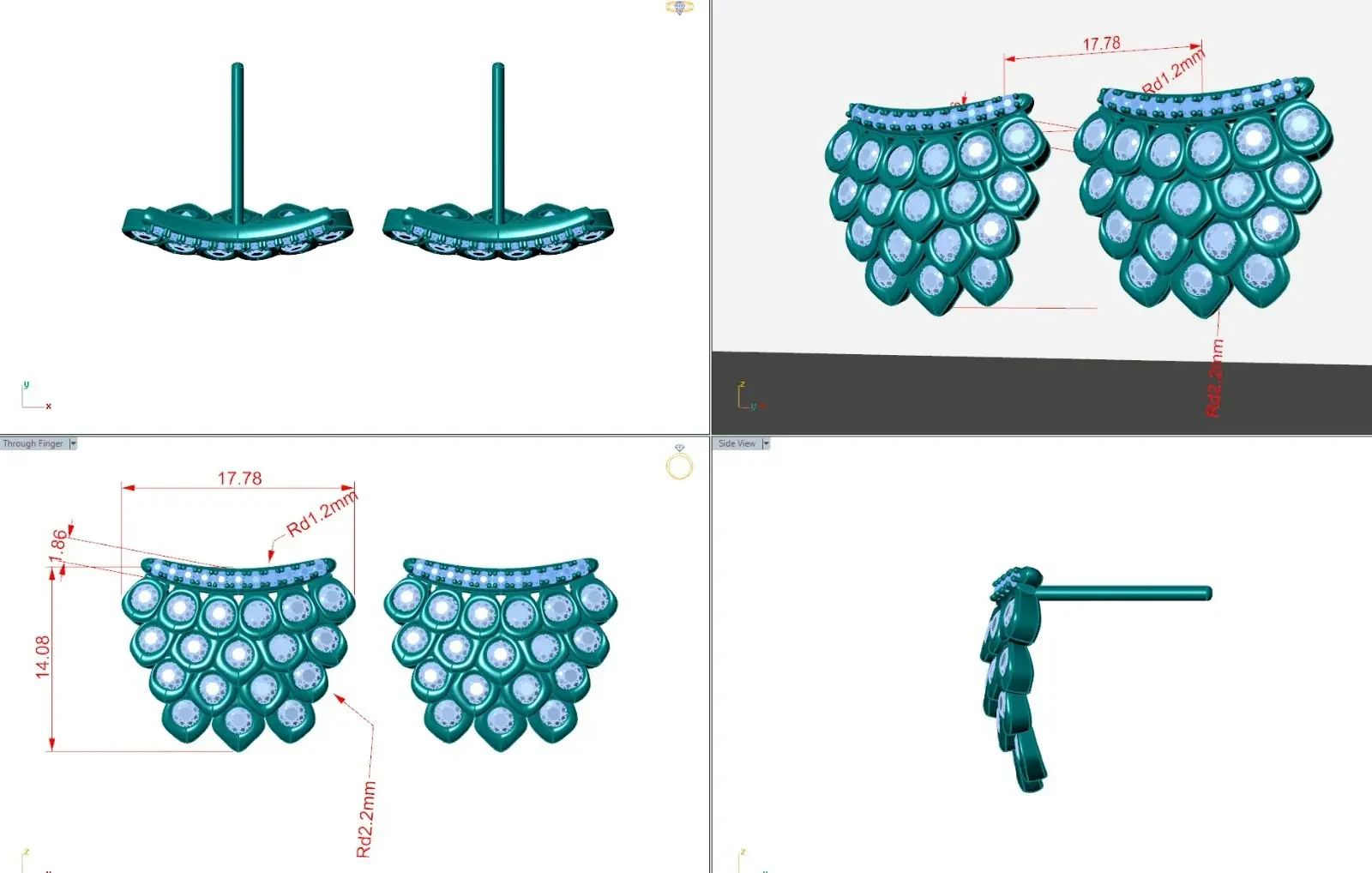
- Custom: CAD renderings and prototypes
Design changes
- Store-bought: none
- Custom: unlimited before production
What About Resale?
This question comes up in probably a third of our consultations, so it's worth answering plainly. Neither option is an investment, and the labor never comes back.
Resale value on any piece of jewelry is driven by the stone and the scrap weight of the metal. That holds whether you bought it from us, from a chain, or online. The exceptions are a small handful of houses (Cartier, Van Cleef, Tiffany) where the name itself carries secondary-market value, and you pay heavily upfront for the privilege.
There is a mild advantage on the custom side, but it's incidental rather than a selling point. More gold means more metal value, and a better center stone holds a larger share of its price than a commercial-grade one does. We mention it because people ask, not because it should factor into the decision.
Meaning: The Part That's Hard to Quantify but Easy to Recognize
We're careful with this one, because the industry oversells it and the word "unique" has been worn down to nothing.
What actually creates the difference is the number of decisions involved. Buying a ring off the shelf comes down to one: this one or that one. A custom piece involves twenty or so. The profile of the shank. Whether the setting sits low enough to wear under a glove. Whether there's something hidden inside that only two people know about. The shape of the gallery, which you'll see every day when you look down at your hand.
That accumulation of small choices is what makes a finished piece feel like it belongs to a specific person instead of to a category.
It's strongest when there's already a stone involved. Remounting an inherited diamond, a stone from a piece that no longer fits your life, or a lab-grown stone you'd rather rebuild than try to resell puts real history into something you'll wear. Nothing off the shelf does that. And since you're not buying a new center stone, it usually costs less than people expect.
When We'd Tell You to Buy Off the Shelf
- You need it in under three weeks. Custom work runs four to eight. Rushing it is how mistakes get made.
- You want to try on the exact piece. Some people need to see it on the hand before they commit. Renderings and prototypes go a long way, but they're not the same thing.
- You specifically want a brand. If part of the point is that it arrives in a particular box, we can't deliver that and we won't pretend otherwise.
- You found the right thing on clearance. Take the deal.
- You want a plain band under $600. There's nothing to customize. Buy it.
How to Compare a Retail Piece to a Custom Quote
If you're weighing an actual ring in a case against a custom estimate, these five questions put the two on the same footing:
- What's the finished gram weight? They may have to look it up. It's the fastest quality tell there is.
- What's the shank width at the bottom? Under 1.7mm on an engagement ring is thin.
- What are the color and clarity ranges of the accent stones? A vague answer usually means commercial grade.
- Is the pavé hand-set or cast in place?
- What does resizing this design require? Particularly relevant on anything with stones running down the shank.
A store with a good product will answer all five without much hesitation. If the answers get evasive, that's worth paying attention to.
Frequently Asked Questions
Is custom jewelry more expensive than store-bought?
Not usually, at comparable quality. Under about $1,500 retail tends to be cheaper, because chain stores buy at volume. Above that, custom generally delivers more metal and better stones for the same money, since you're not covering retail markup, inventory, and markdown risk.
How long does custom jewelry take to make?
Four to eight weeks is typical from first consultation to finished piece. Design and CAD approval take one to two weeks, and production runs another three to five. Simple pieces move faster. Hand engraving or unusual stone sourcing takes longer.
Is custom jewelry better quality than store-bought?
Generally yes, and the difference is measurable rather than a matter of opinion. Custom pieces carry significantly more metal weight, use accent stones matched to the center stone, and are finished by hand rather than in batches. In practice that means fewer repairs over the life of the piece.
Can I use my own diamond or gemstone for a custom piece?
Yes, and it's one of the most common ways people start with us. Inherited stones, diamonds out of a previous ring, and lab-grown stones can all be reset into a new design. It typically costs far less than a custom piece built around a newly purchased center stone.
Can I see the design before committing to it?
Yes. You should never approve a custom piece on a description alone. We provide CAD renderings and revise them until the design is right, before any metal gets cast.
Where to Start
If you're still deciding, the low-commitment move is to see what your idea actually looks like. Our AI custom jewelry design tool turns a description into a visual in a couple of minutes, which helps you figure out what you like before you talk to anyone.
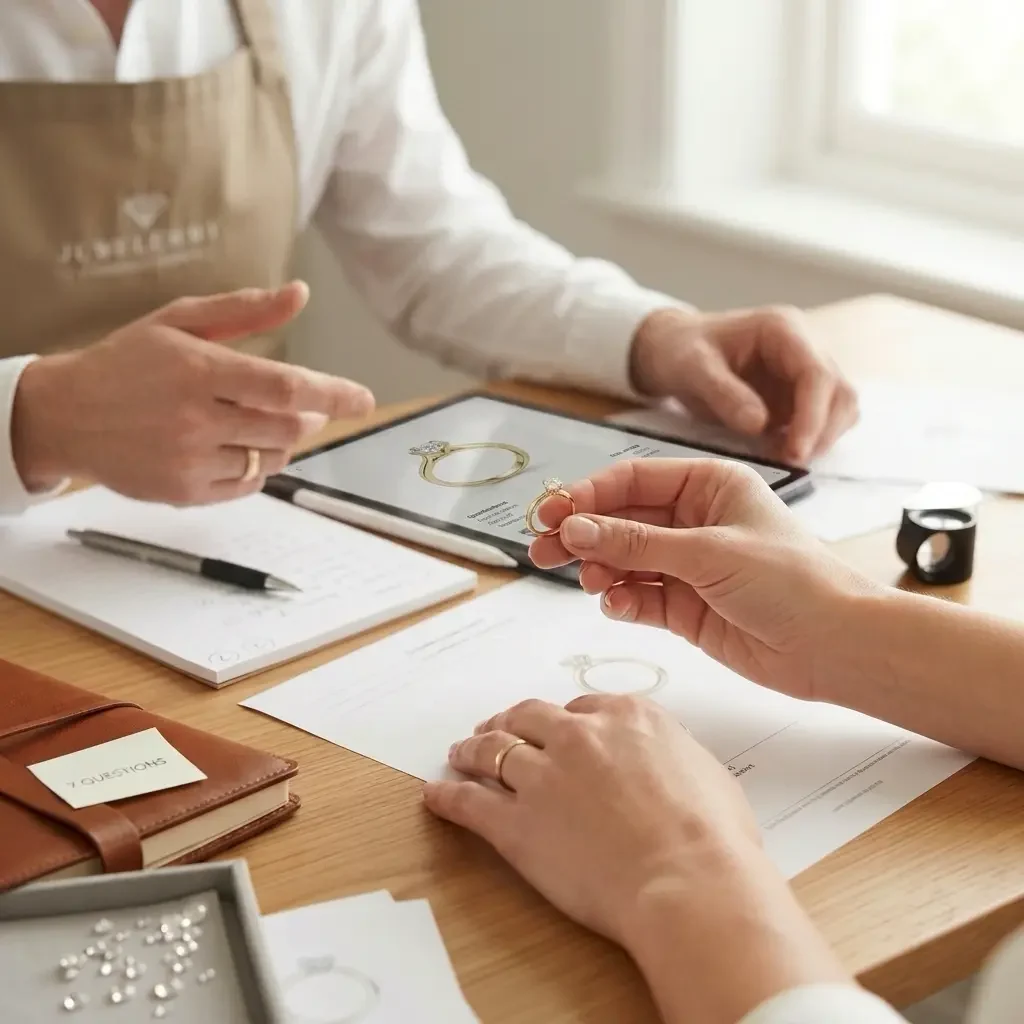
When you're ready for real numbers, consultations are free and there's no obligation attached. Bring photos, a budget range, or an existing stone. We'll tell you honestly whether custom makes sense for what you're trying to do, including when it doesn't.
The Custom Jeweler — 2 West 45th Street, Suite 1705, New York, NY
Written by the design team at The Custom Jeweler. We design and manufacture custom engagement rings, wedding bands, pendants, and earrings out of our office on West 45th Street, and all production is done in the USA.

Matthew Howe - Director of Operations — The Custom Jeweler
Matthew Howe has worked in diamonds since 2012, spending his first years alongside the buyers at a recycled and estate diamond wholesaler — learning how stones are graded, priced, and marked up well before they reach a retail case. He runs The Custom Jeweler day to day and still works client projects himself: the first call, the stone list, CAD approvals, and the last photos before a piece ships. Most of what he writes started as a question a client asked him on the phone.


.webp)